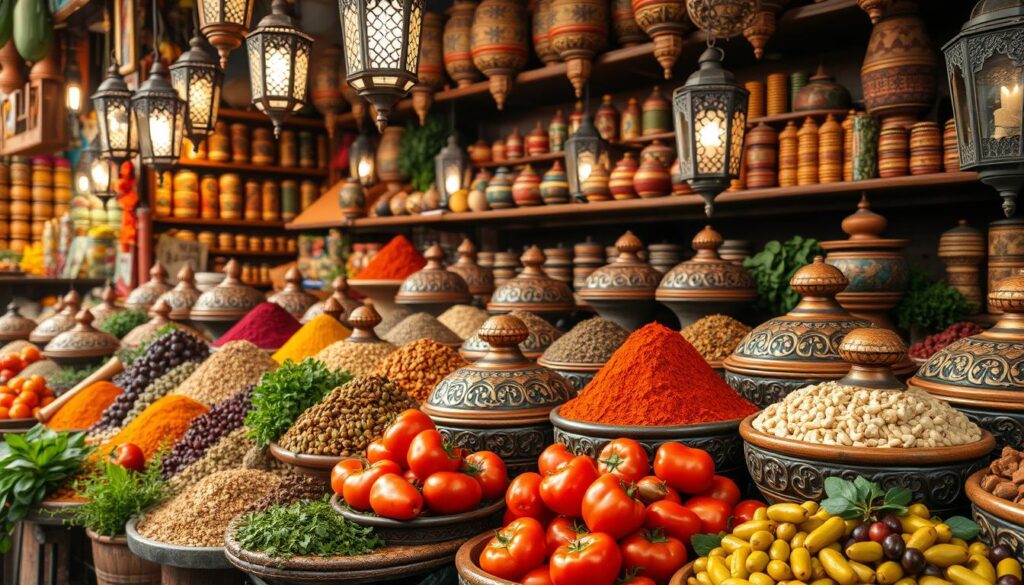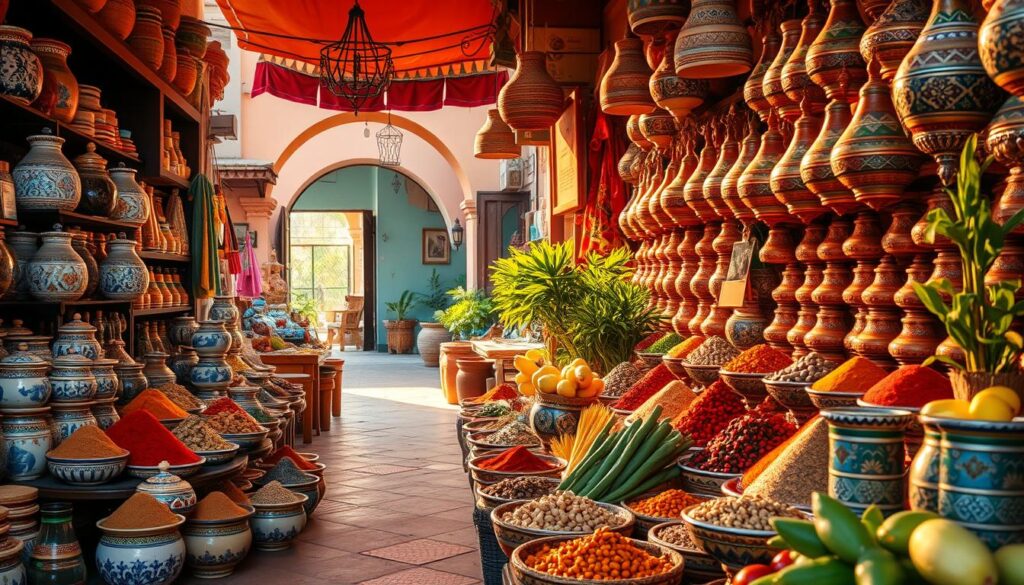
Moroccan Cuisine is a rich tapestry of flavors, blending Arab and Berber traditions with Mediterranean, Andalusian, and southern European influences.
This unique fusion creates complex-tasting dishes with deeply layered flavors, making Moroccan Cuisine a fascinating experience for food enthusiasts.


As North African flavors gain popularity in the US, Moroccan restaurants and food scenes are becoming increasingly popular, offering a taste of this exotic cuisine.
Key Takeaways
- Moroccan Cuisine combines diverse cultural influences.
- North African flavors are gaining popularity in the US.
- Moroccan dishes offer complex and layered flavors.
- The US food scene is embracing Moroccan Cuisine.
- Moroccan restaurants are becoming increasingly popular.
The Rich Tapestry of Moroccan Cuisine in America
As American palates become more adventurous, Moroccan cuisine is gaining traction across the country. This North African culinary tradition is known for its rich flavors, aromas, and diverse influences, making it a fascinating addition to the American food scene.
The Growing Popularity of North African Flavors
The growing popularity of North African flavors in the US can be attributed to the increasing diversity of American cuisine. Moroccan food, with its blend of Arab, Mediterranean, and African influences, offers a unique gastronomic experience. Restaurants across the country are now serving traditional Moroccan dishes alongside innovative fusion creations, catering to the adventurous tastes of American diners.
Moroccan Cuisine is characterized by its use of bold spices, fragrant herbs, and a mix of sweet and savory flavors. This complexity is attracting food enthusiasts who are eager to explore beyond familiar culinary borders.
Key Ingredients in Authentic Moroccan Cooking
Authentic Moroccan cooking relies on a variety of staple ingredients, including lamb, couscous, apricots, olives, chickpeas, saffron, and preserved lemons. The ras el hanout spice blend and harissa chile paste are also essential components, adding depth and heat to many dishes.
These ingredients come together to create the distinctive flavors of Moroccan cuisine. For instance, couscous is often served with vegetable and meat stews, while lamb is used in various tagines and kebabs. The use of preserved lemons adds a salty, tangy flavor to many dishes, enhancing their overall complexity.
Tagine: Morocco’s Signature Clay Pot Masterpiece
In the heart of Moroccan cuisine lies the tagine, a culinary masterpiece that has captured the hearts of food enthusiasts worldwide. The tagine is not just a dish; it’s a traditional clay pot with a conical lid that gives its name to the myriad of recipes cooked in it. This iconic cooking vessel is ubiquitous in Morocco, found in roadside cafes, top-notch restaurants, and homes, always served with bread.

What Makes a Traditional Tagine Special
A traditional tagine is special due to its unique cooking method. The clay pot and conical lid work together to create a self-basting effect, where the steam condenses and drops back into the dish, ensuring the meat is tender and the flavors are rich. The slow-cooking process allows the ingredients to meld together, creating a depth of flavor that’s hard to achieve with other cooking methods.
The ingredients used in a traditional tagine can vary, but they often include meat (lamb, chicken, or beef), dried fruits, nuts, and a blend of spices. The combination of sweet and savory flavors is a hallmark of Moroccan cuisine.
Popular Tagine Variations Found in American Restaurants
In American restaurants, tagine variations have become increasingly popular, adapting to local tastes while maintaining the essence of the traditional dish. Some popular variations include:
- Chicken tagine with preserved lemons and olives
- Lamb tagine with apricots and almonds
- Vegetarian tagine with a variety of seasonal vegetables
These variations showcase the versatility of the tagine, allowing chefs to experiment with different ingredients while staying true to the traditional cooking method.
| Tagine Variation | Main Ingredients | Flavor Profile |
|---|---|---|
| Chicken Tagine | Chicken, preserved lemons, olives | Savory, tangy, slightly salty |
| Lamb Tagine | Lamb, apricots, almonds | Rich, sweet, nutty |
| Vegetarian Tagine | Seasonal vegetables, spices | Varied, aromatic, slightly spicy |
Where to Find Authentic Tagine in Major US Cities
For those looking to experience authentic tagine in the US, several cities offer top-notch Moroccan cuisine. Major cities like New York, Los Angeles, and Washington D.C. have restaurants that serve traditional tagine made with love and care, just like in Morocco.
Some recommended restaurants include:
- Aziza in San Francisco
- Marrakech Restaurant in New York
- Kasbah Restaurant in Chicago
Couscous: The Fluffy Foundation of Moroccan Meals
Moroccan couscous, known for its light and airy texture, is a dish that has gained popularity worldwide. Couscous, or ‘Seksu’ as it’s traditionally known, is a fine wheat pasta that is typically steamed over a stew of meat and vegetables, absorbing the flavors and aromas of the accompanying ingredients.
The Art of Properly Prepared Couscous
Preparing couscous is an art that requires precision and patience. Traditionally, couscous is steamed in a couscoussier, a special pot with a steamer basket, over a simmering stew. The key to perfectly cooked couscous lies in achieving the right balance between the couscous and the steam from the stew. It’s essential to use a gentle heat to prevent the couscous from becoming mushy or undercooked.
Traditional Couscous Toppings and Accompaniments
Couscous is typically served with a variety of toppings and accompaniments that add flavor, texture, and color to the dish. Traditional toppings include slow-cooked meats such as lamb or chicken, along with a mix of vegetables like carrots, zucchini, and onions. The stew is often seasoned with a blend of spices, including cumin, coriander, and cinnamon, which infuse the couscous with rich flavors.
| Traditional Toppings | Description |
|---|---|
| Lamb or Chicken | Slow-cooked meats that add tender flavor |
| Mixed Vegetables | Carrots, zucchini, onions, and more, cooked to perfection |
| Spice Blend | Cumin, coriander, cinnamon, and other spices that enhance the flavor |
Best Couscous Dishes in American-Moroccan Restaurants
In the United States, many Moroccan restaurants offer authentic couscous dishes that showcase the traditional flavors and preparation methods. Some top recommendations include restaurants that specialize in North African cuisine, where couscous is often served as part of a multi-course meal. These restaurants typically offer a range of couscous variations, from classic vegetable couscous to more elaborate meat and vegetable combinations.
Pastilla: Sweet and Savory Pastry Delight
Moroccan Pastilla, a dish fit for royalty, has been delighting palates with its intricate blend of flavors and textures for centuries. This traditional pastry is a masterpiece of Moroccan cuisine, combining the sweetness of spices and the savory taste of meat in a delicate, flaky crust.

The Fascinating History of This Royal Dish
Pastilla, also known as B’stilla, has its roots in the rich culinary heritage of Fez, Morocco. This dish was originally made with pigeon meat, almonds, eggs, and a blend of spices including saffron, cinnamon, and coriander, all wrapped in layers of paper-thin pastry known as “warqa.”
The historical significance of Pastilla lies in its preparation and presentation, which was often served at special occasions and feasts, symbolizing hospitality and generosity.
Traditional vs. American Adaptations of Pastilla
While traditional Pastilla is made with pigeon or chicken, almonds, and spices, American-Moroccan restaurants have adapted this dish to local tastes. Some variations include:
- Using chicken or beef instead of pigeon for a more familiar flavor.
- Incorporating additional spices or herbs to suit American palates.
- Offering vegetarian or vegan versions by substituting meat with ingredients like mushrooms or eggplant.
These adaptations have made Pastilla more accessible to a wider audience while maintaining its essence.
Must-Try Pastilla Variations in the US
For those looking to experience authentic Pastilla in the US, there are several Moroccan restaurants across major cities that offer this dish. Some must-try variations include:
- Classic Pigeon Pastilla at traditional Moroccan eateries.
- Chicken and Almond Pastilla for a slightly different twist.
- Vegetarian Pastilla for a plant-based version of this classic dish.
Exploring these variations allows food enthusiasts to appreciate the versatility and richness of Pastilla.
Harira: The Comforting Moroccan Soup
As the sun sets during Ramadan, many break their fast with a steaming bowl of Harira. This traditional Moroccan soup is not only a staple during the holy month but is also a comforting dish enjoyed throughout the year. Harira is a rich and flavorful soup that embodies the heart of Moroccan cuisine.
The Cultural Significance of Harira
Harira holds a special place in Moroccan culture, particularly during Ramadan. It is a symbol of hospitality and community, often served to guests and family during the breaking of the fast. The soup’s nourishing ingredients help replenish energy after a day of fasting.
Key Ingredients That Make Harira Special
The magic of Harira lies in its hearty ingredients, including tomatoes, lentils, chickpeas, and lamb. The soup is typically finished with a squeeze of fresh lemon juice and a sprinkle of chopped coriander, adding a burst of freshness and flavor. Here’s a breakdown of the key ingredients:
| Ingredient | Role in Harira |
|---|---|
| Tomatoes | Provide a rich, tangy base |
| Lentils & Chickpeas | Add protein and fiber |
| Lamb | Contributes depth of flavor |
| Lemon Juice & Coriander | Enhance freshness and aroma |
Where to Find Authentic Harira Soup in America
For those in the United States craving authentic Harira, many Moroccan restaurants offer this traditional soup. Cities with significant Moroccan communities, such as New York and Washington D.C., have eateries that serve genuine Harira. Look for restaurants that specialize in North African cuisine for the most authentic experience.
Zaalouk: The Eggplant Salad That Captivates American Palates
The allure of Zaalouk, a traditional Moroccan eggplant salad, is now being savored across the United States. This dish, rich in flavor and history, has become a staple in Moroccan cuisine and is slowly making its way into the hearts of American food enthusiasts.

Traditional Preparation Methods
Traditionally, Zaalouk is prepared by slowly cooking eggplant with a blend of aromatic spices, including garlic, paprika, and cumin, with a hint of chilli powder for added depth. The slow cooking process allows the eggplant to absorb all the flavors, resulting in a rich, smoky dip. “The art of making Zaalouk lies in the balance of its ingredients and the patience required to cook it to perfection,” notes a Moroccan chef.
Regional Variations and American Adaptations
While traditional Zaalouk remains a favorite, regional variations have emerged, incorporating local ingredients and tastes. In America, chefs are adapting Zaalouk to suit local palates, sometimes adding ingredients like roasted red peppers or different types of chili peppers. This fusion results in a unique flavor profile that is both familiar and exotic.
Some restaurants are also experimenting with the presentation, serving Zaalouk as a dip with crudités or pita bread, making it a hit as an appetizer or snack.
Restaurants Serving Outstanding Zaalouk in the US
Several Moroccan restaurants across the US are serving outstanding Zaalouk. Notable mentions include Azar Kitchen in New York, known for its authentic Moroccan dishes, and Marrakech Moroccan Cuisine in California, which offers a modern twist on traditional Zaalouk. These establishments are helping to introduce this delightful eggplant salad to a wider audience.
As American diners continue to explore international cuisines, Zaalouk stands out as a dish that is both exotic and accessible, offering a taste of Morocco’s rich culinary heritage.
7 Amazing Moroccan Dishes You Must Try in the United States
From spicy sausages to hearty stews, Moroccan cuisine has something for every food enthusiast in the US. Moroccan dishes are known for their rich flavors and aromas, often combining sweet and savory elements. The diversity of Moroccan cuisine is reflected in its various regional specialties, many of which have gained popularity in American restaurants and homes.
Moroccan Merguez Sausage: Spicy North African Delight
Merguez sausage is a spicy North African sausage made with lamb or beef, seasoned with a blend of spices including cumin, coriander, and chili peppers. This flavorful sausage is a staple in Moroccan cuisine and has become increasingly popular in the US. It’s often grilled and served with couscous or in a sandwich. The spicy kick of Merguez sausage adds a unique flavor to any dish it’s included in.
Rfissa: Chicken with Lentils and Msemen Bread
Rfissa is a traditional Moroccan dish made with chicken, lentils, and msemen bread, typically served during special occasions. The combination of tender chicken, nutritious lentils, and the soft, layered msemen bread creates a comforting and satisfying meal. Rfissa is often flavored with a mix of spices, including ginger, turmeric, and cinnamon, giving it a rich and aromatic taste.
Where to Experience These Authentic Flavors
To experience authentic Moroccan cuisine in the US, one can visit restaurants specializing in North African cuisine, particularly in cities with large Moroccan communities. Cities like New York, Los Angeles, and Washington D.C. have numerous Moroccan restaurants offering a range of traditional dishes, including Merguez sausage and Rfissa. Many of these restaurants also offer cooking classes, allowing visitors to learn about the preparation methods behind these delicious dishes.
Moroccan Desserts: Sweet Endings to Your Culinary Journey
As we explore the rich culinary landscape of Morocco in the US, our journey wouldn’t be complete without indulging in the sweet treats that define the country’s dessert culture. Moroccan desserts are a testament to the country’s rich culinary heritage, blending traditional flavors with intricate preparations.
Chebakia: Honey-Soaked Sesame Cookies
Chebakia are traditional Moroccan cookies made with sesame seeds and soaked in honey, typically served during special occasions. These sweet treats are not only delicious but also carry cultural significance, often being served to guests as a sign of hospitality.
M’hanncha: The Serpent Cake
M’hanncha, or “the serpent cake,” is a traditional Moroccan dessert made with layers of flaky pastry, almonds, and honey. This visually striking dessert is as delicious as it is beautiful, with its layers of pastry and nuts providing a delightful contrast of textures.
American Bakeries Specializing in Moroccan Sweets
For those looking to indulge in authentic Moroccan desserts in the US, several bakeries specialize in traditional Moroccan sweets. These bakeries offer a range of desserts, from Chebakia and M’hanncha to other traditional treats, allowing Americans to experience the rich flavors of Morocco.
| Dessert | Description | Key Ingredients |
|---|---|---|
| Chebakia | Honey-soaked sesame cookies | Sesame seeds, honey |
| M’hanncha | Serpent cake with layers of pastry and nuts | Flaky pastry, almonds, honey |
Conclusion: Embracing Morocco’s Culinary Heritage in America
Moroccan cuisine has woven its rich tapestry into the fabric of American food culture, bringing with it a blend of traditional flavors and innovative twists. The dishes explored in this article showcase the diversity and depth of Moroccan culinary heritage, from the slow-cooked delights of tagine to the sweet endings of chebakia and m’hanncha.
As American-Moroccan fusion continues to evolve, it’s clear that the cultural exchange between Morocco and the US is enriching the culinary landscape. Restaurants across the US are embracing authentic Moroccan recipes, adapting them to local tastes while maintaining the essence of their heritage.
The growing popularity of Moroccan cuisine in America is a testament to the power of food to bridge cultures and bring people together. Whether you’re a seasoned foodie or just discovering the flavors of Morocco, there’s never been a better time to explore the rich culinary heritage that this North African nation has to offer.
FAQ
What is Moroccan cuisine known for?
Moroccan cuisine is known for its rich tapestry of flavors, blending Arab, Mediterranean, and African influences, characterized by the use of ingredients like lamb, couscous, preserved lemons, and a variety of spices.
What is a tagine, and how is it traditionally prepared?
A tagine is a traditional Moroccan dish named after the clay pot in which it’s cooked. The clay pot has a conical lid that allows steam to condense and drop back into the dish, creating tender and flavorful food. Tagine is typically prepared with meat, vegetables, and dried fruits, slow-cooked in the clay pot.
What is couscous, and how is it traditionally served?
Couscous is a staple in Moroccan cuisine, made from crushed durum wheat semolina. It’s traditionally served with vegetables, meat, and sauce, often steamed to a fluffy texture. Couscous is a versatile dish that can be served as a side or main course.
What is pastilla, and what’s its significance in Moroccan cuisine?
Pastilla is a traditional Moroccan pastry made with layers of flaky dough, meat, onions, and spices. It’s often served as an appetizer or main course. Pastilla has a rich history, dating back to the royal courts of Morocco, and is considered a symbol of hospitality.
What is harira, and why is it culturally significant?
Harira is a comforting Moroccan soup made with tomatoes, lentils, chickpeas, and spices. It’s culturally significant because it’s often served during Ramadan to break the fast, and it’s a staple in many Moroccan households.
What is zaalouk, and how is it prepared?
Zaalouk is a popular Moroccan eggplant salad made by cooking eggplant with tomatoes, garlic, and spices. It’s often served as a side dish or appetizer. Zaalouk is a versatile dish that can be adapted to various regional flavors and ingredients.
What are some must-try Moroccan dishes in the US?
Some must-try Moroccan dishes in the US include merguez sausage, rfissa, tagine, couscous, pastilla, harira, and zaalouk. These dishes can be found in many American-Moroccan restaurants, offering a taste of authentic Moroccan cuisine.
What are some traditional Moroccan desserts?
Traditional Moroccan desserts include chebakia, honey-soaked sesame cookies, and m’hanncha, a serpent cake made with layers of flaky dough and almond paste. These desserts can be found in American bakeries specializing in Moroccan sweets.
How is Moroccan cuisine adapting to American tastes?
Moroccan cuisine is adapting to American tastes by incorporating local ingredients and flavors into traditional dishes. American-Moroccan restaurants are innovating and creating fusion dishes that blend the best of both cuisines.